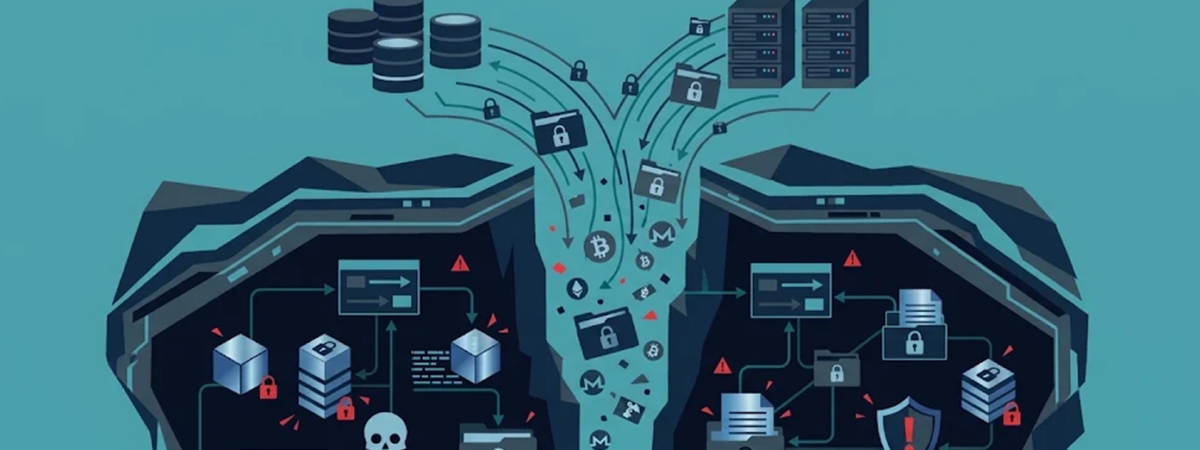
- The dark web marketplaces bridge the gap between numerous criminals, enabling them to pose huge threats in the cyberspace economy.
- Victims around the world doubled as these criminals target vulnerable companies situated in their domains.
- Governments and technology companies now create strategies in collaboration with each other to combat the operations of underground hackers.
Dark web platforms link various internet offenders into one extensive virtual crime market. These concealed pages provide fraudsters with a chance to purchase malicious software and sell stolen information and attack their victims at a faster speed. The number of victims in certain regions have increased twice due to attacks from criminal organizations against vulnerable businesses in certain areas.
Now, authorities and tech companies have started collaborating to thwart such activities. The fight is not about catching a single hacker person. The matter focuses on destroying the system that allows an army of hackers to act simultaneously.
The Rise of Cybercrime Businesses
The hidden part of the Internet enables organized cybercrime. Developers can easily peddle malicious software kits to criminals. A potential client for cybercrime does not even need to know how to code. This is because they can just buy a ready-made software kit, and start attacking their target.
There are individuals who engage solely in illegal activities. They steal passwords from the devices of users or get access to protected computers. Afterwards, they sell the obtained information to customers willing to pay their named price. The flow is that one group gains entry, another utilizes it, & the third undertakes the extortion process.
Stolen browser data is another valuable commodity in these underground markets. In one reported case, reports surfaced in May this year that a dark web marketplace offered stolen browser cookies that could let hackers bypass passwords entirely, showing how criminals turn compromised user data into tools for account takeovers.
Furthermore, criminals often cooperate with each other; they also divide profits and responsibilities. One of the groups might engage in developing the virus code. The second group extorts money from victims. The third group handles inquiries and provides assistance to buyers. This division of labor mirrors how legal companies operate.
Blockchain technology helps them to get away from their deeds. It is almost impossible to trace illegal transactions across ledger systems for the authorities. Some of the groups also use crypto mixers to obfuscate the sources of payments.
As a result, the cybercrime ecosystem is quite sustainable. If the police shut down one group, another will instantly take its place. Thus, the model does not depend on the platform, but on the networks of buyers and sellers.
Growing Threats Facing Local Regions
Various security teams have recorded an increase in online network attacks. Many businesses are confronted with ransomware threats which result in data loss and extortion demands. Statistics on the incidents show this tendency accelerating within the past two years.
Government agencies and banks are under constant pressure from skilled hackers. Local firms have no adequate infrastructure to resist cutting-edge attacks. Smaller businesses are quite likely to have outdated software lacking any protective measures & dedicated security staff.
Experts in cybersecurity claim that those hackers are mostly interested in weak regional establishments. Such institutions usually pay significant amounts to recover their files. Moreover, attackers are aware of the fact that hospitals or local councils cannot stand lengthy interruptions.
In addition, local entrepreneurs tend to ignore basic rules of cybersecurity until it is too late. This situation underlines the ease of entering databases for hackers. It is possible to prevent certain attacks with the help of simple measures like two-step log in and regular backups.
Security experts note that hundreds of ransomware attacks worldwide. Criminal organizations constantly modify their method of attacks to bypass existing regulations and protection. When attackers fail to complete the mission with the help of one method, they immediately switch to another.
Furthermore, there are changes in the pattern of attacks. Attackers have abandoned targeting large companies with lots of money in favor of chasing smaller businesses that pay their ransom much quicker than corporations, though they have less defense measures. Also, a single attack on a regional small supplier can also impact the larger company it serves.
Fighting Back with Joint Defense Plans
Today, many industry leaders are working together to develop strategies that tackle different types of cyber-attacks. In addition, the collaboration between local government bodies and private technology companies is productive in terms of exchange of information related to security threats. This means that if one bank spots any suspicious activity, around a hundred of other banks can also potentially benefit from the information.
Further, colleges and universities work closely with financial institutions to share information regarding new criminal activities. Their security teams regularly conduct tests to understand the basic vulnerability of their systems. This helps them to male patches before attackers can find them.
Additionally, law enforcement agencies manage to locate hidden online platforms using advanced blockchain analytical tools. Thus, police officers can shut down illegal hubs & arrest prominent digital marketplace operators. Recent takedowns have wiped off several large forums & seized their infrastructure.
International cooperation in this context is much better than before. For instance, the police in one country can share evidence with the police of another country within a short time. Moreover, joint operations enable authorities to decommission a number of servers located in various parts of the world within a short time period.
Global intelligence groups note the importance of disrupting the greater criminal economy. Interrupting the money stream is more effective against hackers than merely catching simple malware. If a marketplace loses credibility, clients would not be willing to make purchases there anymore.
Share this article
About the Author

Farwa is an experienced InfoSec writer and cybersecurity journalist skilled in writing articles related to cybersecurity, AI, DevOps, Big Data, Cloud security, VPNs, IAM, and Cloud Computing. Also a contributor on Tripwire.com, Infosecurity Magazine, Security Boulevard, DevOps.com, and CPO Magazine.
More from Farwa SajjadRelated Posts
BO Team Exploits Log4Shell to Breach Russian Software Developer and Target Code-Signing Server
BO Team reportedly used the Log4Shell flaw to gain full control of a Russian developer’s netwo...
North Korean Hackers Use Deepfake CEOs in Fake Zoom Calls to Spread Malware
Arctic Wolf has identified 40 videos of the deepfakes used by the hackers themselves and suspected a...
Viral UK Privacy Claim Falsely Says Ofcom Will Collect Home Wi-Fi Passwords
A viral post says UK households must register their Wi-Fi passwords with the regulator Ofcom. The po...
UK Messenger Case Puts Encrypted Chat Privacy and Automated Image Checks Under Scrutiny
A British man was reportedly arrested after Facebook flagged an image he sent to his wife on Messeng...
York University Confirms Data Breach Exposing Personal Information Dating Back to 2007
York University indicates that an unauthorized person compromised personal information from digital ...
Hackers Use Hijacked WhatsApp Accounts to Spread Malware Disguised as Invoices
Cybersecurity agencies in Malaysia and Singapore warn about malware files sent through hacked WhatsA...