- Hackers secretly gained access to Bulgarian government systems from 2021 and then copied 130 gigabytes of data and over 62 million documents.
- According to the officials, there is no evidence that the hackers stole private data from civilians. They haven’t also disclosed any information about the hackers themselves.
- Now prosecutors will be looking into why agencies weren’t aware of the access or did nothing during those five years.
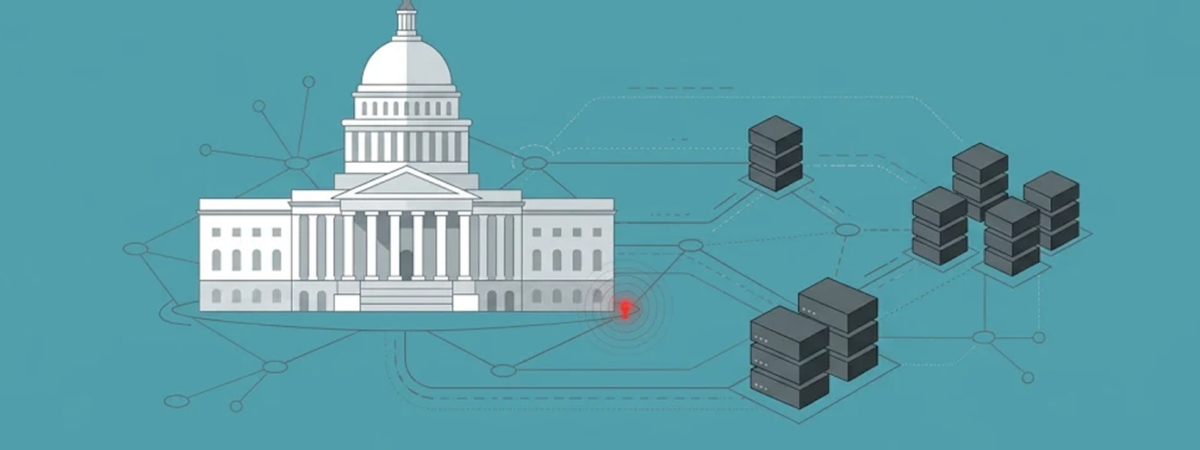
Bulgaria has revealed a cyberespionage attack against its government that lasted 5 years. Authorities in the country reported that the hackers accessed millions of records and government databases over those years.
The scheme has now been declared finished as officials claim to have shut the hackers out. Digital Minister Ivan Vassilev revealed this information in a Wednesday announcement, describing it as the longest and largest cyber spying case Bulgaria has ever recorded.
The Hackers Stole 130 GB of Data
The attacks targeted systems that government agencies used for exchanging official documents. After gaining access into the systems, the hackers moved through multiple parts of the network, and over time copied at least 130 gigabytes of information. According to Vassilev, this means 62 million pages.
The data was related to all spheres of the activities of the Bulgarian state. It included information from the Cabinet of Ministers, departments, and interdepartmental communications. The data provided information about the activities of the state apparatus. However, he does not know of any publication of the data on the dark web.
This is a source of relief for many Bulgarians since, according to him, there is no evidence so far of any involvement of people’s personal information.
How Officials Found Out
A new nationwide cybersecurity defense system was what revealed the infiltration. The country’s Ministry of Digital Development noted on August 5 that it had detected illegal access to government systems and warned that there might have been unauthorized actions for a couple of years already.
According to Reuters, the new system spotted suspicious activity back in August. Old technologies failed to find it. The minister said that the old protective mechanisms weren’t working as a single connected system.
Because of that, the hackers managed to escape with a few governmental bodies. The innovative system provided the authorities with the first complete idea of the situation inside.
The later inspections have proven that the first warnings were correct. Numerous hackers had unauthorized access since 2021, with more cases being detected in 2022.
The Identity of the Hackers Behind the Attack
Vassilev said several international hacking groups were behind the operation. Experts traced their activity to different places around the world. He named no country.
He also claimed that there was no definitive proof linking the hackers to any foreign government or intelligence service. The state authorities are not yet aware of the way the groups used the documents. Cyberespionage can also target government officials’ personal devices. Apple has warned German ministers and lawmakers about possible iPhone spyware attacks. Read our report for more details.
Some of the findings are related to national security, so he is unable to disclose them. Therefore, our knowledge of the situation is incomplete. Former e-government minister Bozhidar Bozhanov gave his interpretation of the problem. Currently, he co-chairs the opposition party “We Continue the Change – Democratic Bulgaria.”
According to him, a five-year effort indicates that the groups have state support. He mentioned China as the most probable sponsor, followed by Russia. He believes that the officials will refrain from naming any countries publicly.
These are his personal opinions; state authorities have yet to confirm them. He also pointed out that classified files were out of reach.
Bulgarian Officials’ Response
Authorities isolated the infected computer systems and blocked the hackers’ access. Theu also removed the malicious software the hackers installed. According to Vassilev, the third phase, which includes the total removal of hackers, is now complete. “The ministry said the systems would be under surveillance for 90 days,” reported Turkey’s Anadolu Agency.
This particular case had involved a joint team. Members include both interior and defense ministries. The State Agency for National Security, State Intelligence Agency, and Military Intelligence Service all helped. Information Services, a company owned by the state, together with private specialists and the European Union Cyber Agency ENISA, assisted in this process. Vassilev said that EU and NATO partners helped identify the attacks.
To avoid any future occurrences, the state is patching up vulnerabilities. Authorities will strengthen the control on administrator accounts and introduce multifactor sign-ins. The monitoring system will cover 28 municipalities and regional administrations.
Meanwhile, the Bulgarian government is in the middle of working on its national cybersecurity strategy. The minister stated that the strategy should have been ready several years ago.
Questions for Prosecutors
According to the directive of Vassilev, the relevant institutions opened an investigation into the incident and submitted the results to the prosecutor’s office. It is this institution that will now decide whether the acts of negligence in the work of state institutions were deliberate.
The case bears resemblance to a previous incident that happened back in 2019 when hackers hacked the site of the National Revenue Agency and got access to tax and financial data of millions of users. This time, the hackers targeted government documentation systems rather than databases of citizens.
The timeline of this case coincides with the political situation in Bulgaria. Bulgaria experienced many unstable coalition governments, which led to issues even in the period between 2021 & 2025. Bozhanov claims that when he started working as the minister at the end of 2021, the governmental systems were very secure.
Bozhanov’s team managed to identify and close some of the vulnerabilities. Nevertheless, the government collapsed before finishing work on the vulnerabilities. Now, Bozhanov says that his party is going to propose a bill to create a single agency responsible for fighting cyber threats.
However, there are still many unanswered questions. The identities of the hackers and who is sponsoring them remain a mystery. We’ll probably know exactly how long the intrusion later after the result of the prosecutors’ review comes out.
Share this article
About the Author

Rebecca James is an IT consultant with forward thinking approach toward developing IT infrastructures of SMEs. She writes to engage with individuals and raise awareness of digital security, privacy, and better IT infrastructure.
More from Rebecca JamesRelated Posts
Dark Web Economy Fuels Ransomware Threats Against Businesses Worldwide
The dark web marketplaces bridge the gap between numerous criminals, enabling them to pose huge thre...
BO Team Exploits Log4Shell to Breach Russian Software Developer and Target Code-Signing Server
BO Team reportedly used the Log4Shell flaw to gain full control of a Russian developer’s netwo...
North Korean Hackers Use Deepfake CEOs in Fake Zoom Calls to Spread Malware
Arctic Wolf has identified 40 videos of the deepfakes used by the hackers themselves and suspected a...
Viral UK Privacy Claim Falsely Says Ofcom Will Collect Home Wi-Fi Passwords
A viral post says UK households must register their Wi-Fi passwords with the regulator Ofcom. The po...
UK Messenger Case Puts Encrypted Chat Privacy and Automated Image Checks Under Scrutiny
A British man was reportedly arrested after Facebook flagged an image he sent to his wife on Messeng...
York University Confirms Data Breach Exposing Personal Information Dating Back to 2007
York University indicates that an unauthorized person compromised personal information from digital ...