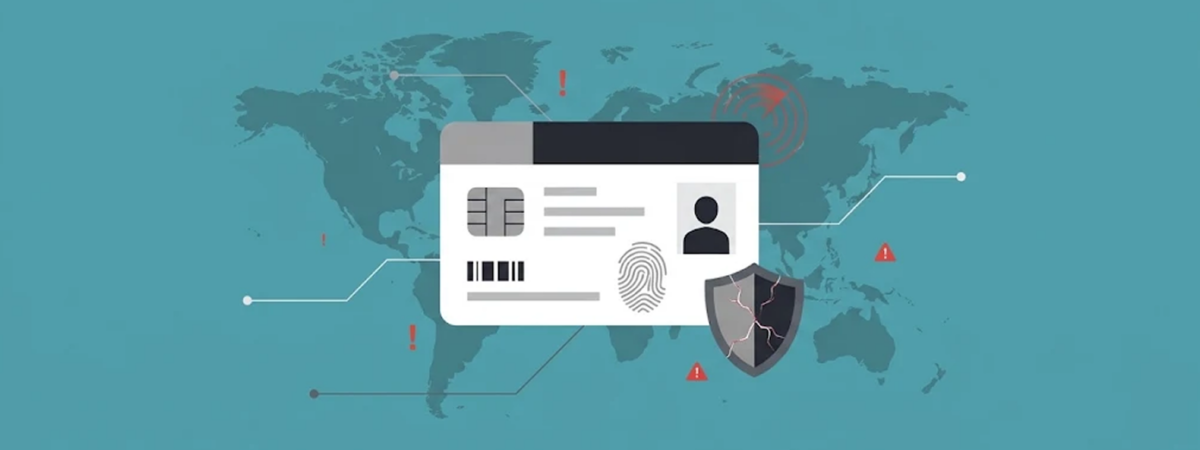
- A social media post accuses Bill Gates of promoting digital identity to increase government surveillance.
- The Gates Foundation indicates that through the digital public infrastructure project, it intends to enhance access to services and financial inclusion for unbanked people.
- The social media post mentions the Aadhaar scheme of India and the internet identity scheme of China as examples highlighting the risks.
A social media post has labeled Bill Gates as a threat to government monitoring and online liberty by a social media post. According to that post, Gates allegedly used his charity to promote digital identity, electronic payments, and data transfer as essential global infrastructure. The post then claims that this move will help governments exercise greater control over people.
The post mentions the Aadhaar system of India as Gates’ model for other countries. Aadhaar allocates a specific number to more than 1.4 billion people. Additionally, the post mentions the centralized identity system of China as another way for such a move. It claims that Gates wishes for governments to have control over what individuals can read, write, & share on the internet.
What Gates and his Foundation Actually Promote
According to Gates Foundation, digital public infrastructure (DPI) refers to reusable digital components that serve to address public needs. The system includes items like digital payments and digital IDs as well as data-sharing systems. DPI is said to connect people, data, and money like a road connects people and goods.
The foundation aims to ensure financial equality. It claims that billions of people do not have access to banks and other financial services. DPI believes that it is possible to help people in the regions with deficient economies receive services for payment, health, and government. According to the foundation, the countries developing secure DPI would succeed in building competitive economies & providing essential services.
Gates has celebrated the digital technologies of India over and over again in his speeches. He referred to Aadhaar and UPI as one of the major contributions of India to the world. In his speech at IIT Delhi in 2024, Gates stated that Aadhaar has helped millions of people access banking services, government incentives, and healthcare.
The foundation supports the use of open-source solutions that other countries can implement. Such solutions include MOSIP which is available for digital identity, and Mojaloop which is operational for payments.
The foundation claims that these instruments allow countries to manage their systems by themselves. It also allocates funding for projects aimed at extending digital identity capabilities in Africa and Asia.
The Concerns About Digital ID Systems
Critics feel that a mandatory digital identity provides the government with too much control. The post explains that with the linking of all accounts to a verified identity, governments can block specific people from accessing the internet. Moreover, they would not simply create new accounts with different email to bypass such a ban.
Concerns about government access to digital information have also emerged in Canada. A proposed law, Bill C-22, has drawn privacy concerns from technology companies and civil liberties groups over its potential implications for online privacy and surveillance.
Another example from the post is Apple removing Bitchat from the Indian App Store. Bitchat enables communication between nearby mobile devices without a central server or an internet connection, using Bluetooth mesh technology.
The IT Ministry of India has ordered the removal of the app under Section 69A of the IT Act. The authorities claimed that the content is illegal in India. So, Apple had to comply with the decision. The post mentions this case as proof of the level of control India has through digital technology.
Some critics have also targeted China’s system. According to the post, China makes its citizens identify themselves to access the internet and uses surveillance to follow political dissidents. In 2025, China introduced an internet identity service. The government claims the service is optional and compliant with privacy rules. However, critics believe that it serves as a method of strict control.
The Aadhaar system also encounters problems in India. Apart from the fact that 102 million people are likely to be without Aadhaar, 30 percent of people in India do not possess this ID. Moreover, without this identity, such citizens cannot participate in the welfare program or get essential service. Additionally, the system has faced a series of biometric failures, as rejection of fingerprints is higher among people residing in remote areas & marginalized users.
What the Post Claims About the Intentions of Gates
Further, the post claims that Gates advocates for digital ID so that he can help people, but actually seeks to empower the Gates Foundation and governments. The post goes on to claim that Gates discovered during the COVID-19 pandemic how to track entire populations. Such a move involved the use of contact tracing and vaccine certification.
According to the post, using mandatory digital ID combined with advanced artificial intelligence surveillance has the potential of enabling governments to gain insight into the relationships, beliefs, & actions of people. This can easily become a danger for journalists, whistleblowers, political dissidents, and activists. This is because they often rely on anonymity to operate without facing persecution.
Fact-checkers have debunked claims that Bill Gates is using vaccines or digital ID for controlling the population. One conspiracy theory from 2020 claimed Gates wanted to use microchips for tracking people.
According to FactCheck.org, the Gates Foundation funded research to put vaccination records on skin using invisible ink. It does not aim to track current locations of people. Moreover, a Bosnian fact-checking site found that a popular quote about Bill Gates’ idea of controlling the movements of people with the help of digital ID was false.
Share this article
About the Author

Farwa is an experienced InfoSec writer and cybersecurity journalist skilled in writing articles related to cybersecurity, AI, DevOps, Big Data, Cloud security, VPNs, IAM, and Cloud Computing. Also a contributor on Tripwire.com, Infosecurity Magazine, Security Boulevard, DevOps.com, and CPO Magazine.
More from Farwa SajjadRelated Posts
Bulgaria Uncovers Five-Year Cyberespionage Campaign Targeting Government Systems
Hackers secretly gained access to Bulgarian government systems from 2021 and then copied 130 gigabyt...
Dark Web Economy Fuels Ransomware Threats Against Businesses Worldwide
The dark web marketplaces bridge the gap between numerous criminals, enabling them to pose huge thre...

BO Team Exploits Log4Shell to Breach Russian Software Developer and Target Code-Signing Server
BO Team reportedly used the Log4Shell flaw to gain full control of a Russian developer’s netwo...
North Korean Hackers Use Deepfake CEOs in Fake Zoom Calls to Spread Malware
Arctic Wolf has identified 40 videos of the deepfakes used by the hackers themselves and suspected a...
Viral UK Privacy Claim Falsely Says Ofcom Will Collect Home Wi-Fi Passwords
A viral post says UK households must register their Wi-Fi passwords with the regulator Ofcom. The po...

UK Messenger Case Puts Encrypted Chat Privacy and Automated Image Checks Under Scrutiny
A British man was reportedly arrested after Facebook flagged an image he sent to his wife on Messeng...